

Want to learn aboutagile values?
The agile approach is one of the most efficient ways to create products.
ButAgileisn’tjustorganizesprintsand update Agile boards.
To implement the Agile methodology, your team must also follow some core Agile values . in this article to introduce you to the
We will use examples fromCommunityin this article to introduce you to the4 core valuesof the Agile approach. We’ll also highlight the bestsoftwareAgile project management softwareto help you quickly adapt to the Agile method. Community!
So bring your study group, because everyone is welcome in this Community!
What are agile values?
Agile values are thefourguiding traits described in the Agile Manifesto, the guiding document for agile projects.
They are:
- Individuals and interactions about processes and tools
- Functional software about documentation comprehensive
- Customer collaboration rather than contract negotiation
- Embrace change rather than following a plan
However, the Agile values are not just rules you must follow to complete your project.
After all, theAgile movementisn’t like Senor Chang’s Spanish class in theCommunity,where you get removed from class for giving the wrong answer!
Instead, these values will develop an agile mindset that will help a software developer achieve better results, faster. Therefore, although they are not required , these values are strong reminders of what the Agile methodology stands for.
What is agile project management?
The approach Agile is a modern software development and project management methodology that emphasizes adaptability and efficiency. In fact, the agile practice is popular for increasing the efficiency and collaboration of software teams, helping them deliver customer-centric products modern software development and project management methodology that emphasizes the adaptability and the efficiency .
In fact, the agile practice is popular for increasing the efficiency and collaboration of software teams, helping them deliver products quickly.
But what does thedevelopment process involve? Agile?
Let’s find out…
How does Agile work?
The Agile method helps teams coordinate better and deliver results faster than if they were using a traditional project management methodology like Waterfall.
Here’s an example to help you understand the difference between Agile and Waterfall:
Let’s say you’re part of a team of software developers with an agile mindset.
Your team is developing an app for Greendale study groups. The final product should help the group manage their study sessions.
Instead of delivering the entire application in one release (as with traditional methods), you would split it into several small releases, each with a short development cycle (known as a sprint)oftwo to four weeks.
After each sprint, your team will submit a version of the app to the study group for feedback.
When your team of developers works together with the customer, you will soon have an amazing product that meets all your needs!
But for this to happen, you need to follow the 4 agile values and the 12 principles described in the Agile Manifesto.
The 4 Essential Agile Values
The Agile manifesto is a minimalistminimalistwhich delivers only the essence of the Agile structure. But its real meaning (and everyday application) can be a little difficult for people like Chang to identify.

That’s exactly why we’re covering each valuein detail!
See how the Agile manifesto values apply to your Agile organization:
Agile value # 1:individuals and interactionsabout processes and tools
From filling out project approval forms to requesting permission to use the conference room, every company has a way of doing things.
Of course, these can be effective management tactics in their own way.
But sometimes these processes impede the team’s agility.
And when that happens, just direct conversations can solve the problem.
The creators of the Agile framework recognized the power ofpeople and interactionsin speeding things up. And as a result, the essence of any Agile process will have some human element.
Take on the task of understanding customer needs, for example.
Of course, you can ask them to fill out a standard form. But this form alone will not be able to capture all your requirements correctly.
Why not interact with them directly?
You will be able to clearly understand what they need in the final product and clarify any questions or problems easily!
Furthermore, to make the most of the team’s potential, an Agile organization needs to put its team’s resources first. I mean, at the end of the day, they are responsible for the development process!
This is why Agile practitioners are discouraged from overly relying on processes and tools. Instead, rely on individuals and interactions!
Agile Value #2: working software rather than comprehensive documentation
However, in such a setup, reams of paperwork can or not lead to anything concrete.
Moreover, it takes crucial time that could have been invested in creating valuable software.
That’s why the Agile methodology recommends something better to replace the useless paperwork:the product itself!
Agile practitioners introduce a working version of software to their clientsalmost every two weeks. While this will help you get their feedback, you will also be able to meet your deadlines.
However, this does not mean that the Agile process doesn’tgiveimportance to documentation . But faced with a tight deadline, working software will always trump detailed documentation.
After all, you can always document things later, right?
Agile Value #3: Customer Collaboration Instead of Contract Negotiation
If an Agile organization and its customers simply outline everything to be done up front, this leaves little room for improvisation for the software developer.
This goes against the very essence of Agile development.
Without close collaboration with the client, a developer can lose sight of his vision.
And when the final product is ready, customers may not react as favorably as expected.
Rather than negotiating such contracts, Agile practitioners are advised to collaborate with customers at all levels of the development process.
For example, if you are following Scrum, the Scrum master should regularly include the customer in sprint review meetings, user testing sessions, and focus group discussions.
Of course, this speeds up the software development process because of the multiple customer inputs the software development team receives.
But more importantly, practicing Agile gives teams the time and space to better realign with customer needs and develop valuable software for them.
Agile Value #4:embrace changerather than following a plan
Most people believe that change is expensive, complicated and should be avoided at all costs.
But as Senor Chang puts it:

That’s right! Change, like Chang, is inevitable.
And Agile teaches us to embrace it (and him!).
Because life is unpredictable and crazy things can derail your project.
Like your school being taken over by an evil dictator-type security guard.

Similarly, your initial assumptions for the project or customer needs could change at any time.
This would be impossible to handle under traditional project management constraints.
For example, you started by assuming you are making an application for a six-member study group. But with Chang’s acquisition, there may be no more study groups at Greendale Community College!
However, with Agile practice, you have review meetings and other opportunities to adapt to such changes without compromising your project.
Although, with Chang around, you might want to completely rethink your business priorities!
The 12 Agile Principles
The creators of the Agile development method didn’t just stop at developing values.
They also gave us 12 Agile project management principles that clarify what the priorities should be for anAgile team .
Hopefully, this should help you avoid confusion like this in your Agile organization:

Here’s a quick look at each Agile manifesto principle to help you hone an Agile mindset.
(We have categorized each principle into 4 distinct groups to help you better understand its essence.)
Group A. Agile Project Management Principles on Customer Satisfaction
- Prioritize customer satisfaction above all else.Deliver on your promise by providing them with high-quality software on time.
- Say yes to changing requirements, even at the last minute.Agile processes harness change and help you create valuable software for your customers.
- Keep delivering often; preferably every two weeks or months.This helps you get customer feedback regularly to adapt the product or software accordingly.
Group B. Agile Project Management Principles on Quality
- To determine the success of your development processes,Focus on how well your functionalsoftwaresatisfies customers.
- TheAgile process is based on atest-driven development processtest-oriented. To implement this, make sure your team has the resources necessary to maintain a steady pace.
- Attention continuoustotechnical excellenceandto good designboostsagilityto help you seamlessly meet customer needs.
Group C. Agile Project Management Principles on Collaboration
- Project stakeholders and project developers must work together regularly.This helps your team actively collaborate for continuous improvement.
- Build projectsaround motivated team members and give them the support they need.Always trust them to do the job right.
- Encourage members to have more face-to-face conversations,as it is the most reliable and efficient way to convey information.
- Help yourteamself-organize and work without supervision.The best kind of work emerges from these teams.
Group D. Agile Project Management Principles on Managing Teams
- Keep your processes simple and get rid of non-essential work.This is the heart of an Agile project.
- Constantly evaluate your team’s performance to fine-tune them into a better and efficient team
Each Agile principle (when followed, of course) will certainly help you develop a product that perfectly meets the needs of your customers.
How to manage your Agile projects efficiently
An Agile development project is like a game of paintball.
To be successful, you needagilityand collaboration.
Each agile value and principle in the agile framework will lay the foundation for your project’s success.
But that’s basically it.
How you canreally manageyourAgile projectnow?
Luckily, you have powerful project management software to help you!
Traditional, outdated project management software may be good enough for the dean’s office, but it won’t meet the needs of your Agile project.
After all, Agile is all about change and agility!
That’s why you need a great Agile software development project tool like ClickUp by your side!
But what is ClickUp?
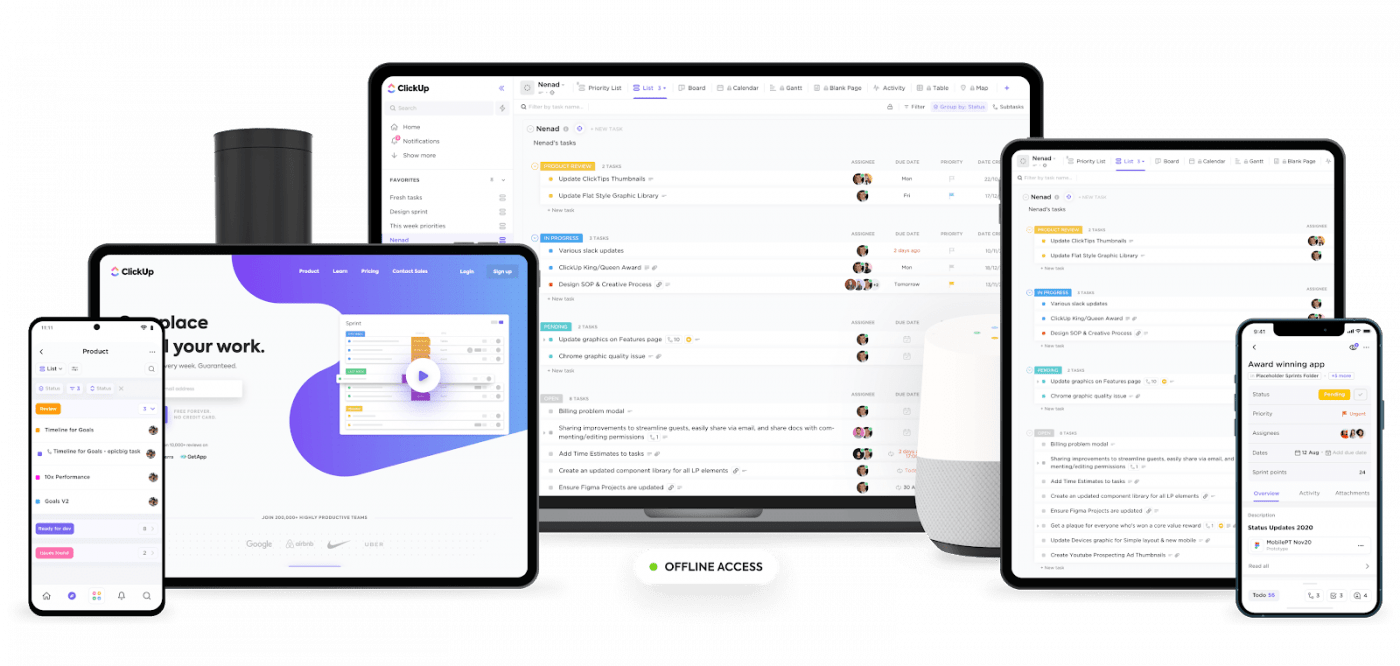
ClickUp is one of the world’s leading project management tools, used by teams from startups to tech giants around the world. it has
With a wide range of collaboration and Agile software development features, it haseverythingyour Agile team needs!
The best part?
It’s super easy to get started with ClickUp.
See how ClickUp features supportsuccessful Agile product management.
A. Manage sprints withsprint lists
Running would be a useful skill for playing paintball at Greendale Community College.
But an Agile project requires completely different types of sprints.
Sprints are short development phases (each lasting 2 to 4 weeks) that end with the presentation of a working product to the customer.
Because each sprint contains as much action and excitement as a typical paintball game, it can be difficult to track your progress.
But not with ClickUp!
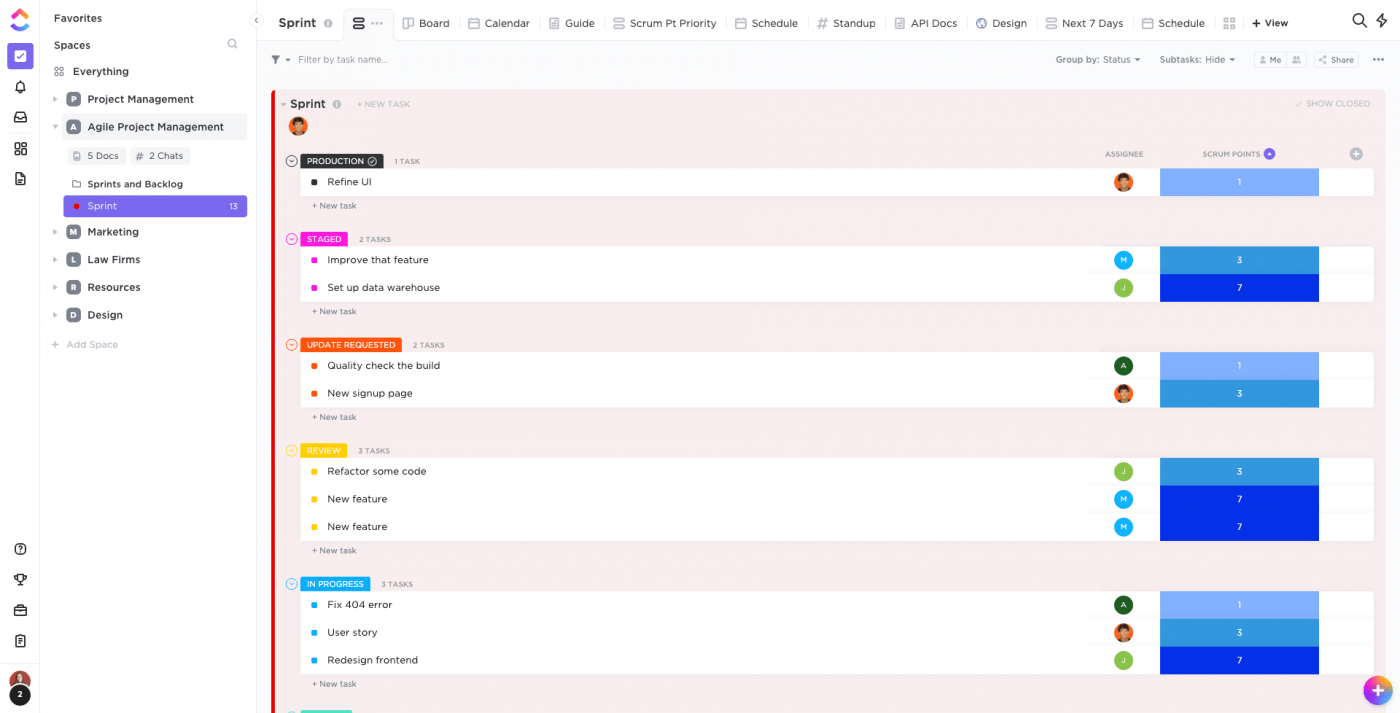
The ClickUp Sprint Listis a simple checklist that breaks down each sprint into small tasks. Every time you finish a task, you can quickly check it off the list!
You can create a checklist for all your Agile projects, tasks, subtasks, and even your user stories. You can also add Scrum points to a list to evaluate the time it will take to complete backlog items.
The best part?
B. Get high-level overviews in customizable dashboards
An Agile team, especially one working remotely, needs something as reliable and affordable to manage things and increase their team’s agility.
And that’s exactly what you get with the featureClickUp Dashboard!
It will provide quick visual summaries of your entire project to ensure things are going according to plan.
You can even customize your dashboard with sprint widgets such as:
- Speed Charts : Highlights your task completion rate
- Burndown Charts : Shows the amount of work remaining on a project
- Burnup Charts : displays the amount of work already completed on a project
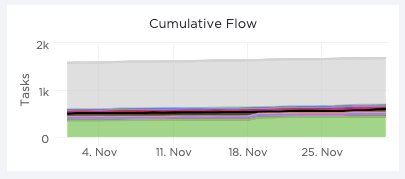
- Cumulative Flowcharts : shows task progress over time
C. Use thecomments sectionto collaborate effortlessly
Film nerd Abed has had his communication problems in the past.
But an agile project requires all team members to communicate constantly, even if they work remotely.
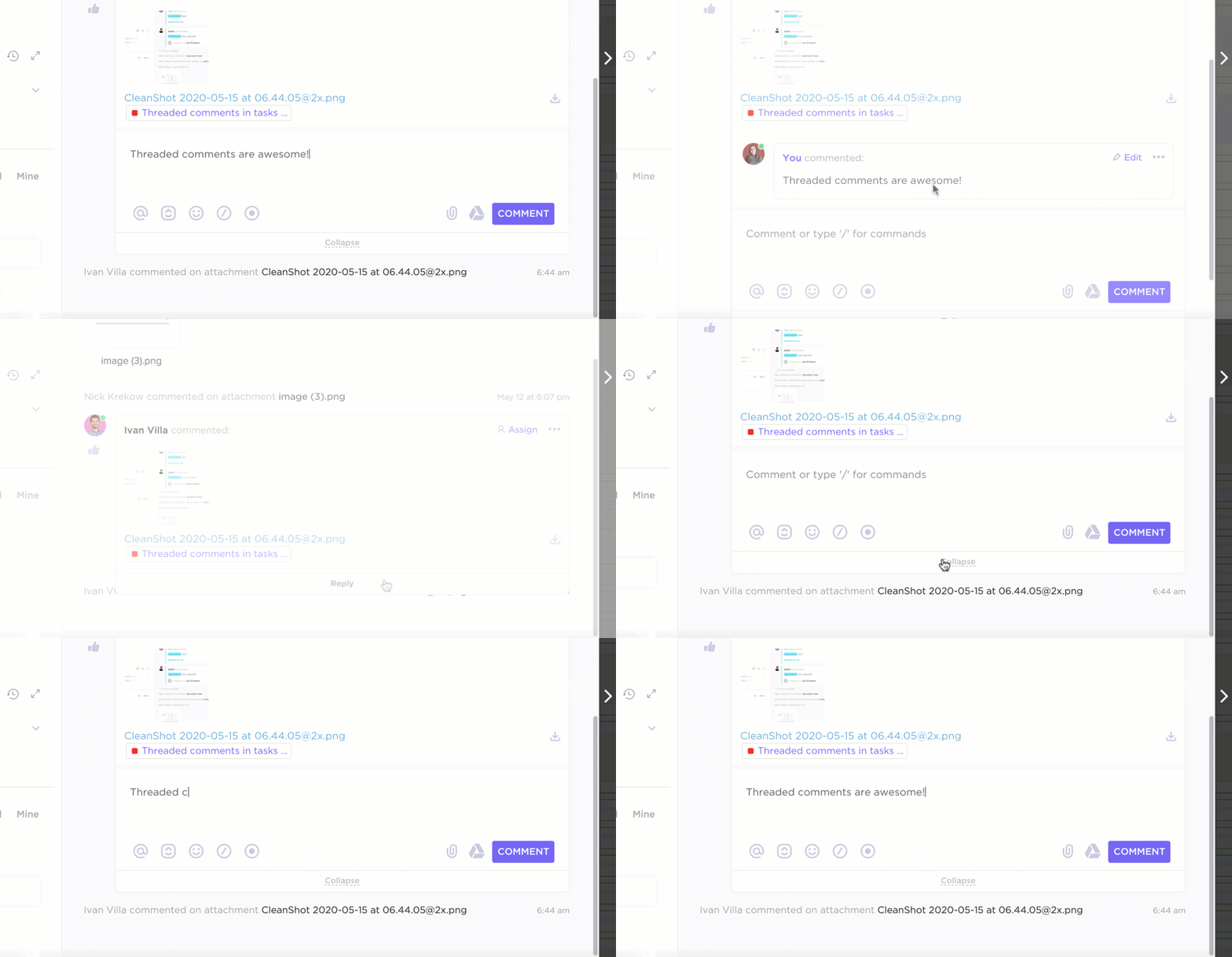
Fortunately, ClickUp makes it easy for your team to have conversations with yourcomments section.
You can use it to:
- Detailed conversations:about a specific task, activity or assignment
- Tagging team members:to alert them to important comments
- Document and file sharing:to give your team what they need to get ahead at work
We know what you’re thinking.
Won’t Abed have to go throughall those commentsjust to see what he was tagged in?
With assigned comments from ClickUp, he won’t need it!
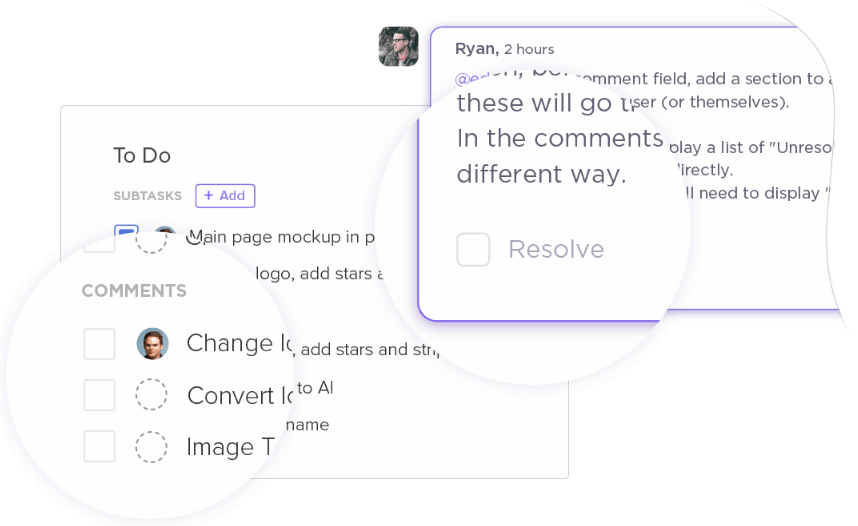
You can convert any comment into a task and assign it to yourself or another team member! ClickUp notifies the designated team member and even displays the comment in their task tray, ensuring they stay top of mind.
Once they finish the task, they can simply resolve the comment to avoid unnecessary follow-ups.
D. Custom access rights to bring stakeholders into your project space
The ‘creation’ of an Agile project can be more interesting than just the end result. And an agile team is encouraged to include its customers at various stages of development (value #3).
To make this happen, ClickUp allows you to sharecustom access rightswith them.
This allows you to share your project files, folders, and task lists with anyone inside and outside your network.
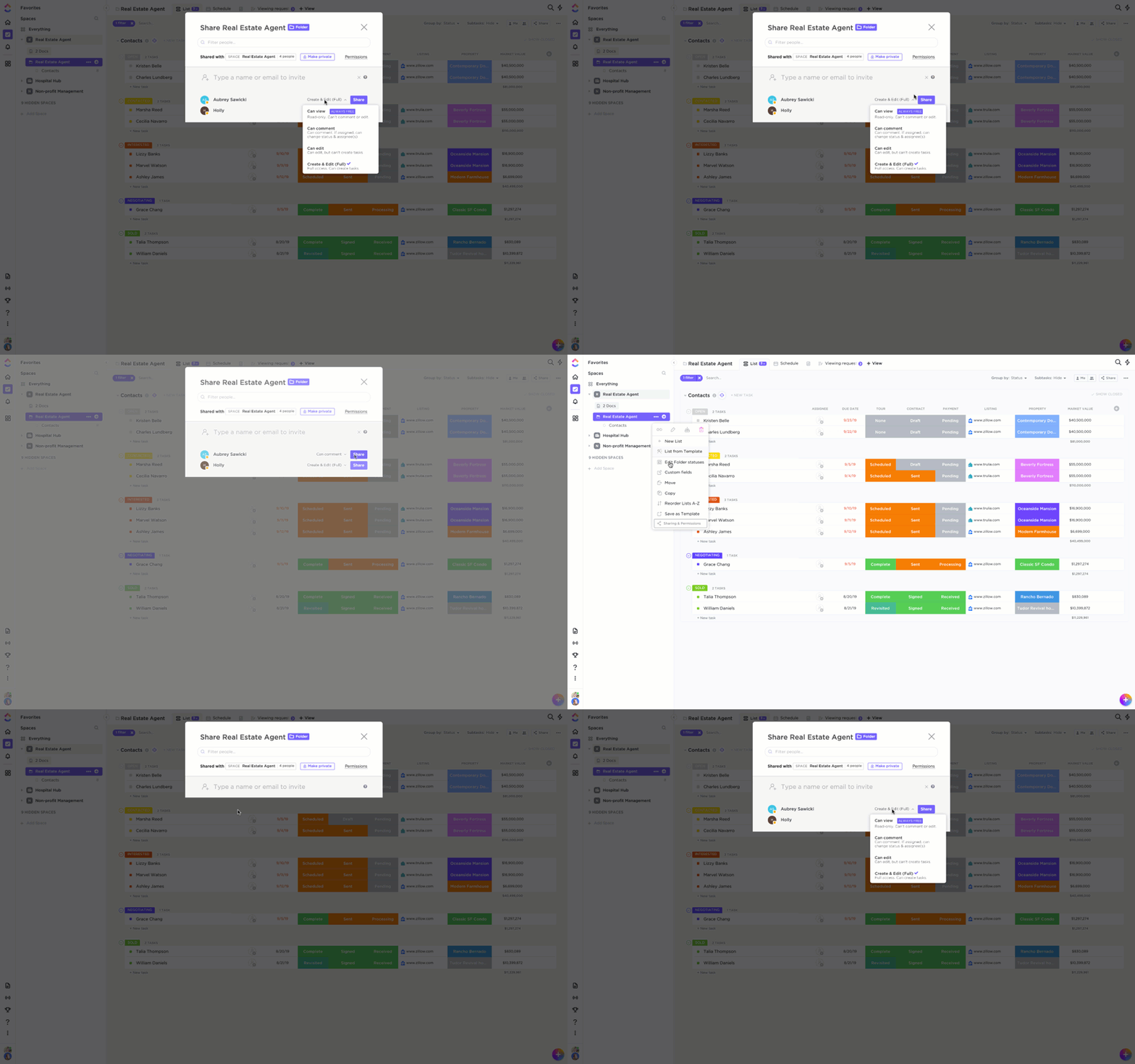
But you still retain full control over everything they can do once inside. Go ahead and set your ‘ permissions ‘.
Here are some types of permissions you can set for people outside your team:
- Can view: Can view project details, but will not be able to interact
- Can comment: can only comment on tasks and task lists
- Can edit: cannot create tasks, but can edit them
- Create and edit: can create your own tasks and subtasks
- Can delete: can delete tasks that have not been created
We hope this allows you to make an Abed-style documentary of your project!
E. Track project progress withGantt charts
Abed’s mind is a supercomputer that can remember thousands of movie references and track parallel timelines.
But the rest of us mortals have limited abilities.
There is no way to manually track the hundreds of tasks, subtasks, and deadlines in an Agile project!
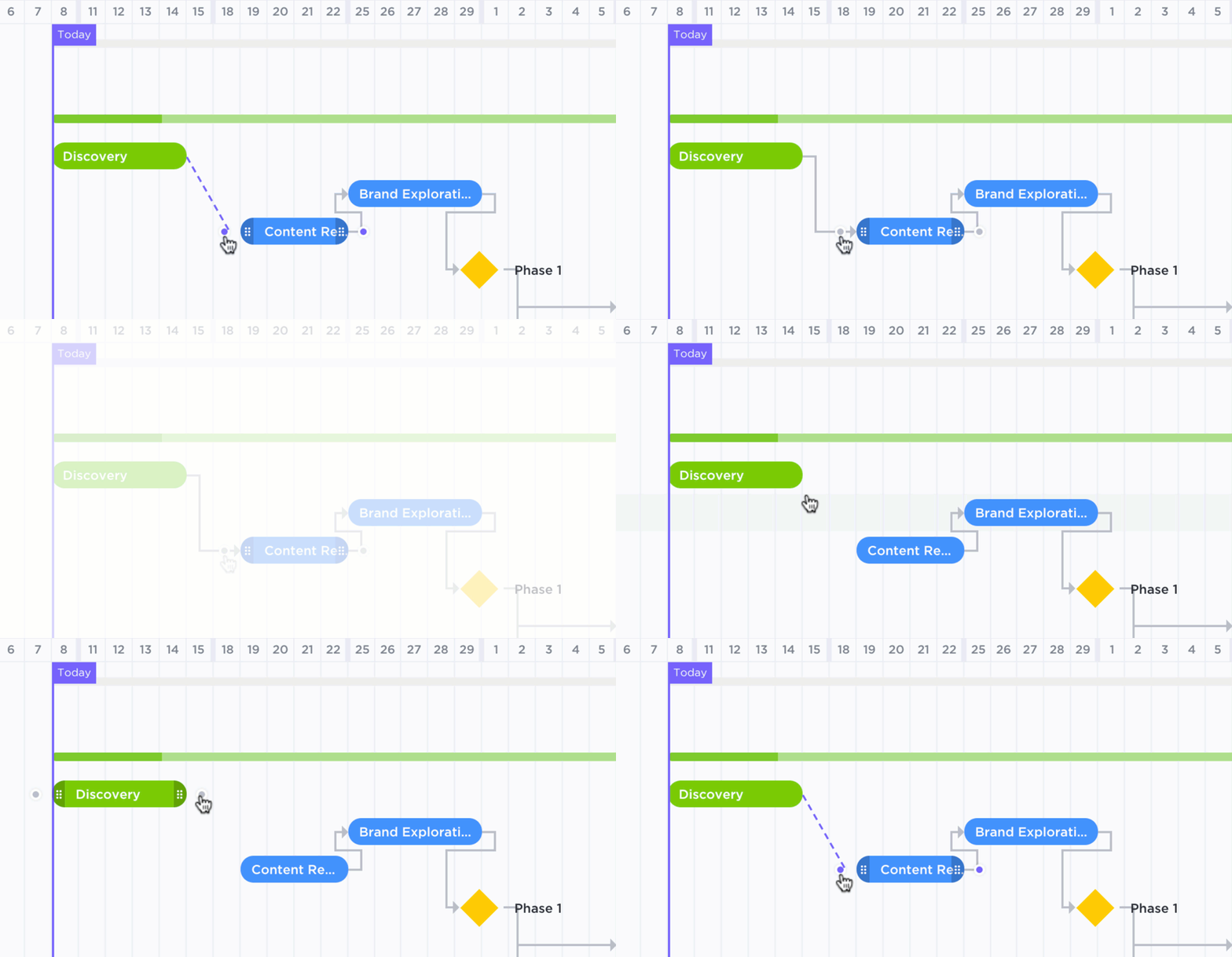
Luckily,ClickUp’s Gantt chartswill do this for you.
It provides a complete overview of your software development process in an easy-to-use, color-coded interface!
It can also automate various project processes in real time.
- Automatically readjust Task Dependencies after rescheduling any task
- Instantly calculate your project’s percentage of completion based on completed tasks versus total tasks
- Compare current progress with expected progress on your planned project timeline
- Instantly calculate your project’s critical path so you know which tasks you must complete to meet deadlines on time
But that’s not all of ClickUp’s features.
There’s a lot more where that came from!
THE ClickUp also offers some other awesome Agile project management features, like:
- Native time tracking : use the Chrome extension to track time usage by task
- Goals : break down your sprint goals into easier-to-achieve goals achieve
- Multiple views: choose from multiple project views such as list view, board view, box view, calendar view, and me mode
- Priorities: try the most important tasks first
- Weekly scorecards : track your developer team’s objectives and goal progress at a glance
- Custom statuses : create project-specific statuses for your tasks
- Pulse: learn which tasks your team is most active on over a period of time
- Project Management Automation: automate repetitive project processes to save time
Conclusion
Agile project management methodology can dramatically improve results in software development and other projects. can dramatically improve results in software development and other projects.
So, if you are switching to the Agile method, you must follow the Agile values and principles to scale new heights in project success.
But you cannot deliver products that meet your customers’ needs using old and clunky .
What you need is a modern, agile software development project tool like ClickUp !
It has all the features to increase speed and transparency, making it the softwareperfectfor agile project management .
Sign up for ClickUp today to help your team achieve project success in style – no matter where they are!
Explore more
Everything TaskUP does with ClickUp, in English.