
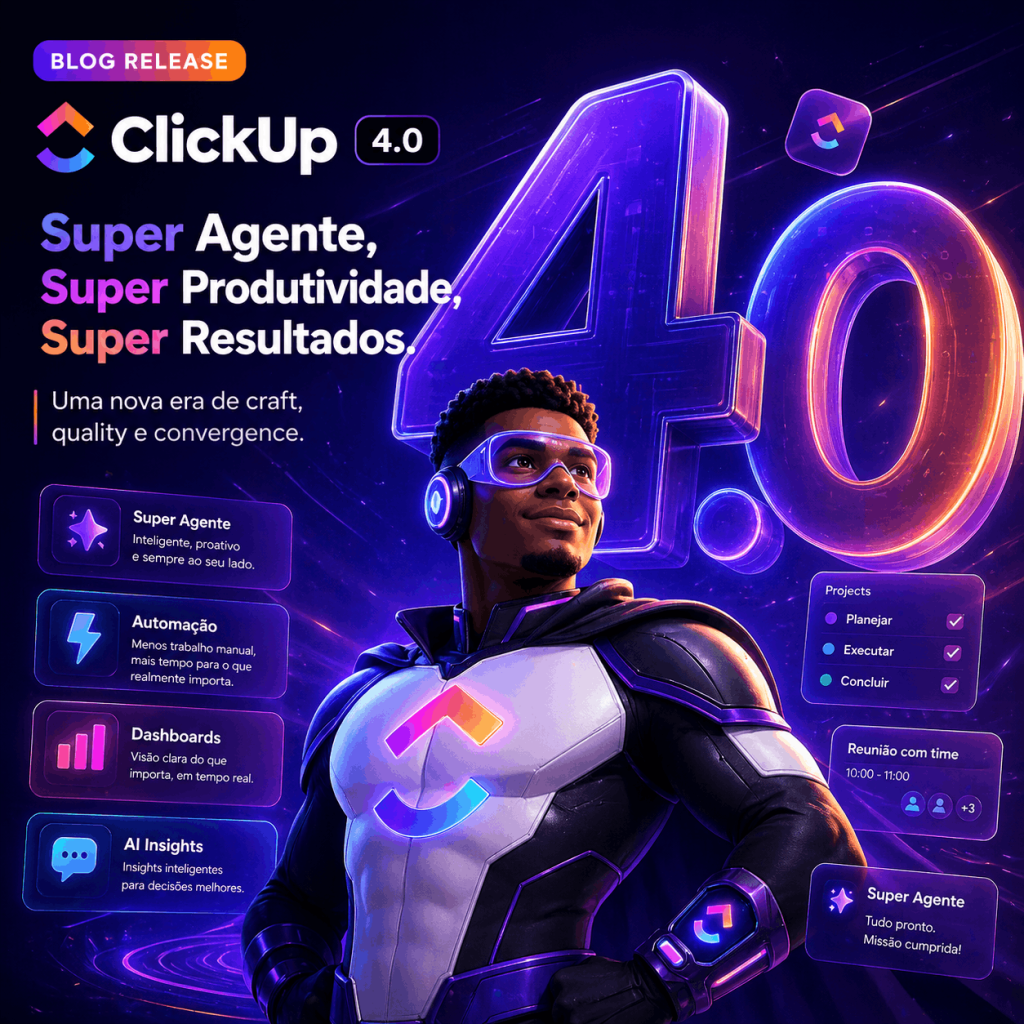
ClickUp AI agents represent a new generation of human-like AI agents that live directly within the workplace and serve as automated teammates. These agents are not just traditional chatbots or one-off automations: they have access to the full context of the workspace, can execute entire flows 24/7, and interact with tasks, documents, chats, meetings, and calendars in the same way a person would collaborate.
The launch of Super Agents shifts the focus from reactive automations to proactive agents that understand the team’s context. They bring human-like memory and broad knowledge within the scope of the workspace and connected tools, allowing them to make decisions or take actions based on history, documentation, and existing integrations.
What are ClickUp AI agents and what capabilities do they have
ClickUp AI Agents (Super Agents) are described as human-like agents that collaborate with the team within the environment. They see work the same way users do — perceiving tasks, documents, chats, meetings and calendars in one place — and use this integrated view to perform operations that go beyond simple chat responses.
In practice, these agents can take on the complete execution of specific workflows on an ongoing basis, which includes both administrative activities and tasks that involve coordination between teams. The following table summarizes examples of flows cited as direct capabilities of these Super Agents.
| Capacity | Description (as per source) |
|---|---|
| Work triage | Evaluate and prioritize tasks or requests as per arrive. |
| Scheduling | Organize schedules and appointments according to demands and agendas. |
| Report generation | Compile and produce reports based on workspace data. |
| Sending emails | Perform email communications related to processes and results. |
| Creation | Generate content or artifacts required for workflows (documents, summaries, etc.). |
How these agents collaborate with the team
Super Agents are designed to operate as digital teammates, interacting with team members through direct actions. Instead of relying exclusively on rigid triggers, the interaction is built to accept requests and delegations naturally within the shared environment.
At TaskUP, one of these agents works with the commercial team via the company’s WhatsApp: responds to the lead, completes the task and signals when the lead has warmed up. The ClickUp WhatsApp integration with AI agent shows you the actual conversation and task.
- Get mentioned (@mention) in conversations and tasks to get your attention.
- Receive formal task assignments by taking responsible for deliveries.
- Receive direct messages for specific instructions or private conversations.
- Have your own schedules and respond to triggers configured to perform automatic actions.
- Operate as an active colleague, participating in continuous flows integrated into daily work.
Architecture, memory and implications for operations
The technology behind Super Agents describes a new agent architecture, designed to adapt to the team rather than imposing rigid AI workflows. This design seeks to combine “infinite knowledge” with human-like memory, ensuring that agents maintain context of the workspace and connected tools over time.
Operational aspects relevant to teams and governance include the ability of agents to work continuously (24/7) and to execute processes that previously required constant human intervention. The presence of contextual memory increases the potential for decisions that are more aligned with the project’s history, while integration with documents, chats and calendars allows for more coherent responses and actions.
Practical risks and points of attention
When incorporating agents with memory and broad access to the context, teams need to consider internal guidelines on scope of action, those responsible for review and limits of autonomy. Space documentation and existing governance rules become fundamental to guide automatic decisions and to ensure that the agent’s actions follow internal policies.
It is also important that actual workflows are used as a basis for configuring and guiding agents; According to the source, the first versions of Super Agents were inspired by community-shared workflows, which reinforces the need for faithful modeling of each organization’s processes.
Super Agents were stress tested by the community and received feedback that helped shape their release, and availability was extended to all users as per the update described in the source.
For teams considering introducing these agents, it is recommended to first map the processes that require the most screening, scheduling and reporting time, defining human review checkpoints and quality indicators that automated actions must respect.
More information and reference resources can be consulted on the official page mentioned by the source.
Super Agents mark an important step in collaborative automation: by combining a unified view of the workload, contextual memory, and the ability to run flows 24/7, they expand teams’ operational options while requiring clear governance to maximize security and efficiency. Available to everyone as communicated by the source, these agents bring new opportunities to rethink who does what within work cycles.
Explore more
Everything TaskUP does with ClickUp, in English.